Umami began with curiosity in a kitchen, and it grew into science that shapes how we cook today.
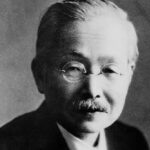
In 1908, Kikunae Ikeda, a professor in Japan, studied a simple broth called dashi, made from kombu seaweed. He noticed a taste that did not match sweet, salty, sour, or bitter. The flavor felt deep, savory, and lasting. He isolated the source and identified glutamic acid as the key compound. He named this taste “umami,” which means “pleasant savory taste.”
That first step explained one part of the story: glutamate creates umami. But the full picture came later.
In 1913, Shintaro Kodama discovered that dried bonito flakes, another key part of dashi, contained a compound called inosinate. He found that inosinate did not just add flavor on its own—it boosted the effect of glutamate when the two were combined.
Decades later, in 1957, Akira Kuninaka identified another compound in dried mushrooms: guanylate. Like inosinate, guanylate worked with glutamate to amplify the umami taste.
These compounds are known as nucleotides—specifically disodium inosinate and disodium guanylate when used in cooking. They interact directly with glutamate on your tongue. When glutamate binds with these nucleotides on your taste receptors, the signal sent to your brain becomes much stronger and more lasting. This interaction is what we now call umami synergy.
Science later confirmed the mechanism behind this effect. Your tongue has specific umami receptors, often described as T1R1 and T1R3 receptors. Glutamate activates these receptors, and nucleotides like inosinate and guanylate enhance that activation. The result is a richer, more complete taste experience.
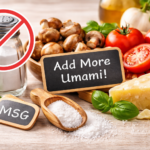
You use this science every time you cook. Tomatoes, cheese, and vegetables bring glutamate. Meat and fish bring inosinate. Mushrooms bring guanylate. When you combine these ingredients—like meat with mushrooms, or parmesan with tomato sauce—you create synergy, and your food tastes deeper and more satisfying.
For home cooks, the history is simple and practical. Umami started with one insight in 1908, and it expanded through discoveries in 1913 and 1957. Today, you can use that knowledge in your own kitchen. When you combine the right ingredients, you do more than add flavor—you unlock it.