Umami synergy is what happens when specific compounds in food come together and create a deeper, more powerful savory taste than they can create on their own. You are not just adding flavor—you are combining the right pieces so they work together.
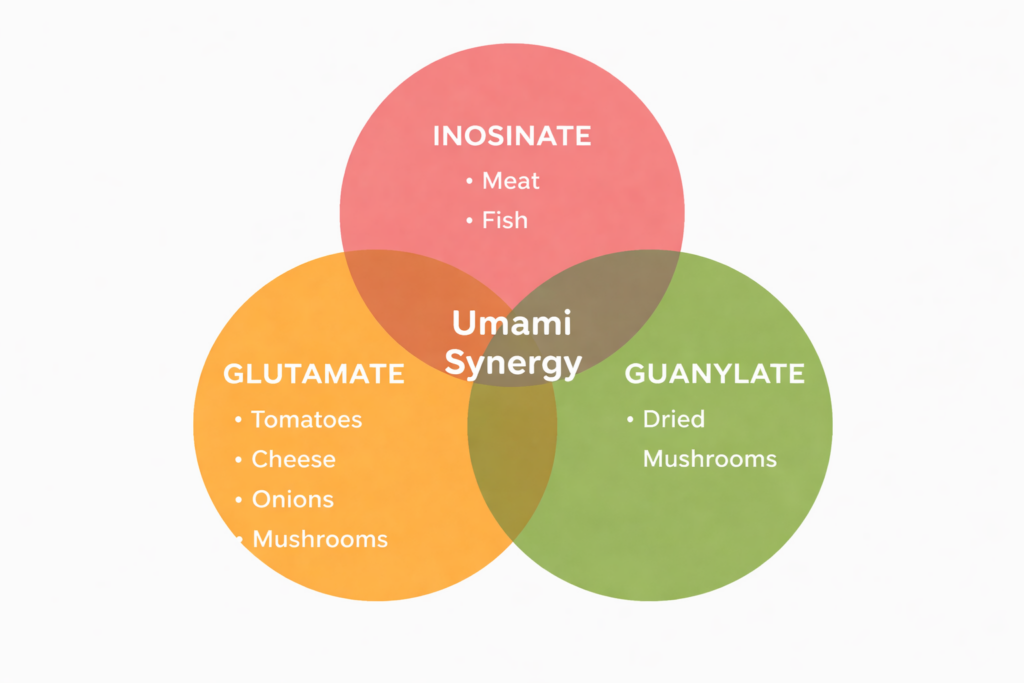
At the center of this are two types of compounds: an amino acid and a group of nucleotides. The amino acid is glutamate, which you find in foods like tomatoes, cheese, and onions. The nucleotides are inosinate and guanylate, which you find in foods like meat, fish, and dried mushrooms. Each one can trigger umami on its own, but the real impact comes when you combine them.
Here is the key idea: glutamate and these nucleotides interact directly on your taste receptors. When glutamate binds with inosinate or guanylate on your tongue, the signal sent to your brain becomes much stronger and lasts longer. The taste does not just increase a little—it can become several times more intense, which is why simple dishes can suddenly taste rich and complete.
You already use this in your kitchen, even if you do not think about the science. When you add parmesan to a tomato sauce, you pair glutamate with more glutamate and boost depth. When you cook meat with mushrooms, you combine glutamate with nucleotides and create true synergy. When you add a splash of soy sauce to a stew with beef, you strengthen that same interaction.
As home cooks, this gives us a clear and simple advantage. You do not need complicated recipes or expensive ingredients. You just need to combine foods with intent. Pair plant foods that contain glutamate with protein-rich foods that contain nucleotides, and you will build more flavor without adding more effort.
Umami synergy follows one simple rule: the right pairing beats more seasoning. When you understand how glutamate and nucleotides work together, you stop chasing flavor with extra salt, and you start creating meals that taste full, balanced, and deeply satisfying.